
🧩 Two paradigms, one core
The typed query builder and the declarative orm share one Session, one
dialect, one scanner, one set of errors. A row fetched via orm feeds query
on the same transaction — no library lock-in, no camp to pick.

One library, two front-ends over one core: an explicit, generics-first query
builder and a declarative, convention-driven orm — same backends, same
transaction, same normalized errors. Use orm for CRUD and drop to query for a
hot path on the same connection. SQLite is CGo-free; Postgres, MySQL, and SQL
Server are first-class too.
🧩 Two paradigms, one core
The typed query builder and the declarative orm share one Session, one
dialect, one scanner, one set of errors. A row fetched via orm feeds query
on the same transaction — no library lock-in, no camp to pick.
⚡ Modern baseline, lean core
Generics-first, no hot-path reflection. The core pulls in zero drivers —
each backend is its own module. SQLite is pure Go: cross-compile with plain
go build, ship static binaries, no C toolchain — and open it encrypted at
rest, still pure Go, no CGo sqlcipher.
🤖 Built for agents
An embedded studio with AI built in turns plain English into SQL, and
shipped Agent Skills + AGENTS.md mean your coding assistant writes correct
LiteORM the first time. AI for the people using and building your database.
🎯 Safe by default
No implicit lazy loading — eager Load is N+1-safe by construction. Soft-delete
is an explicit tri-state scope. Constraint and not-found errors normalize to the
same sentinels on every backend.
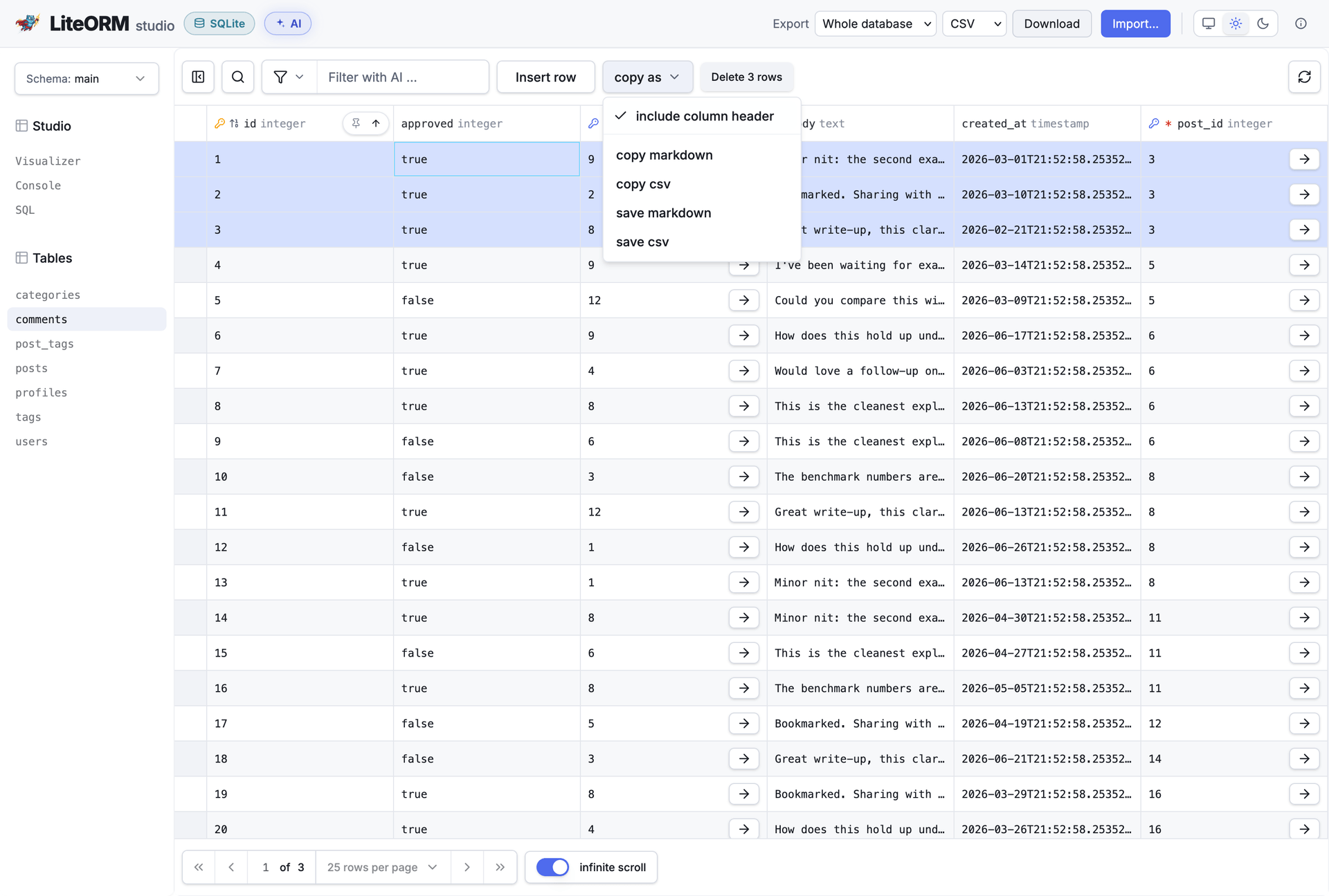
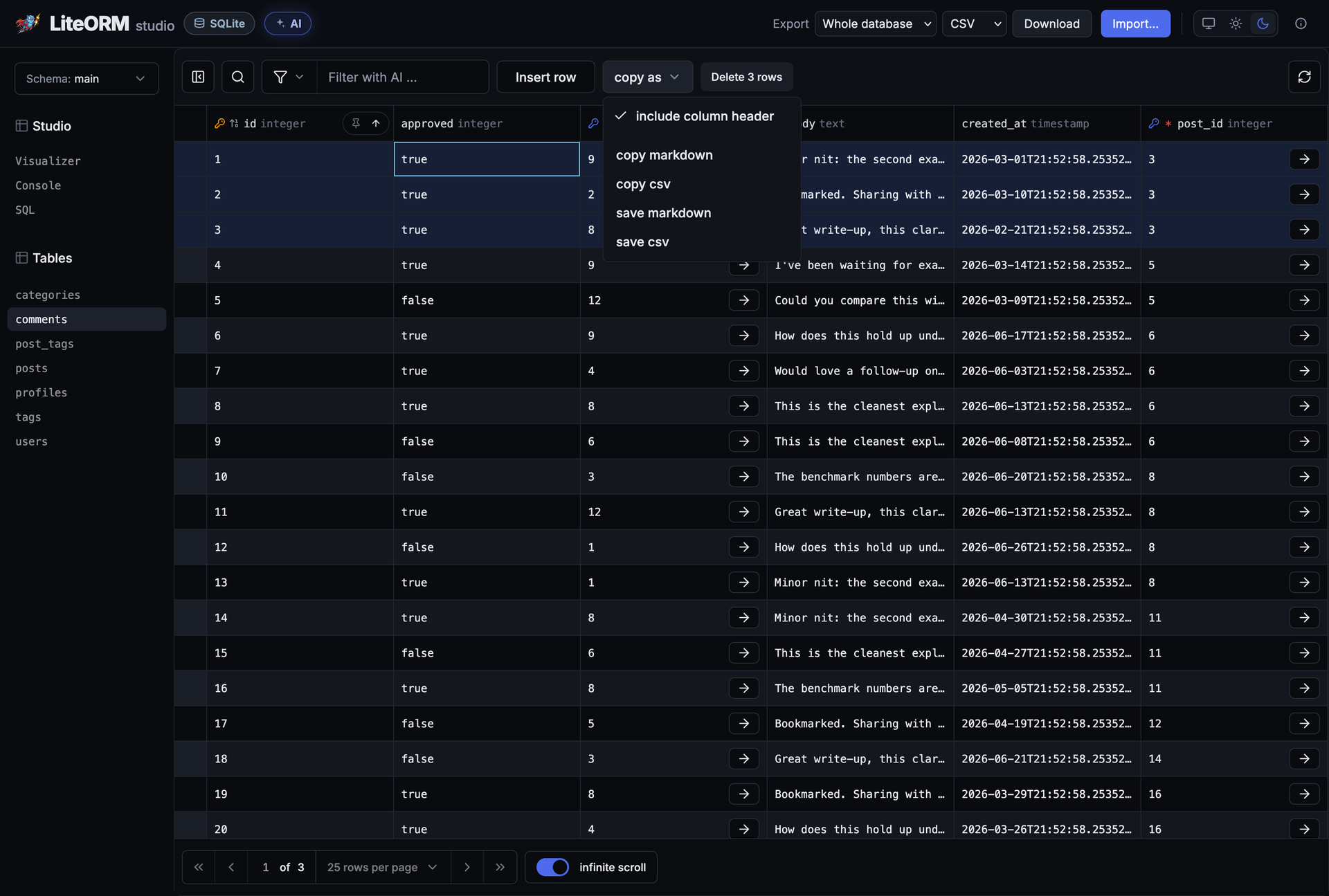
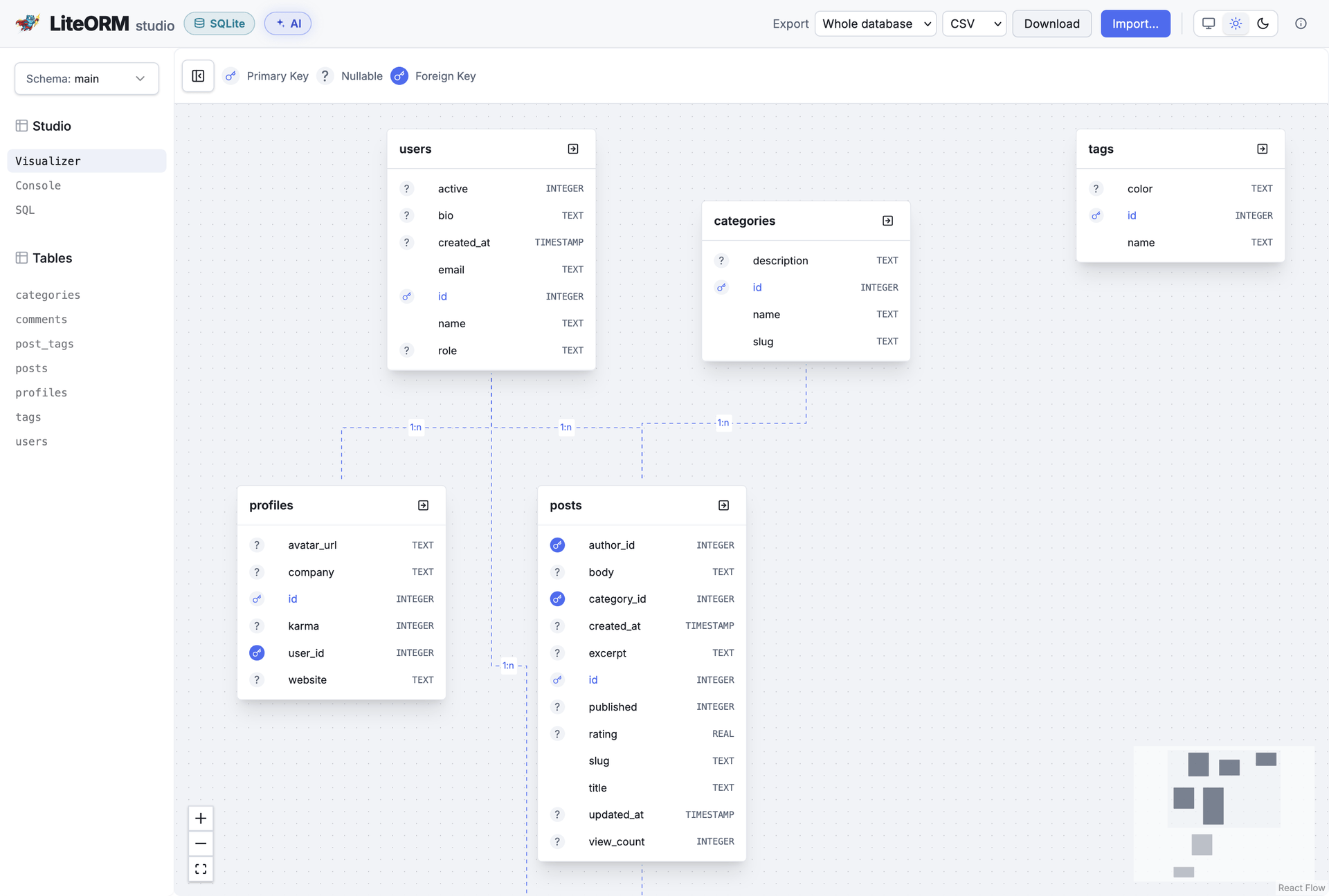
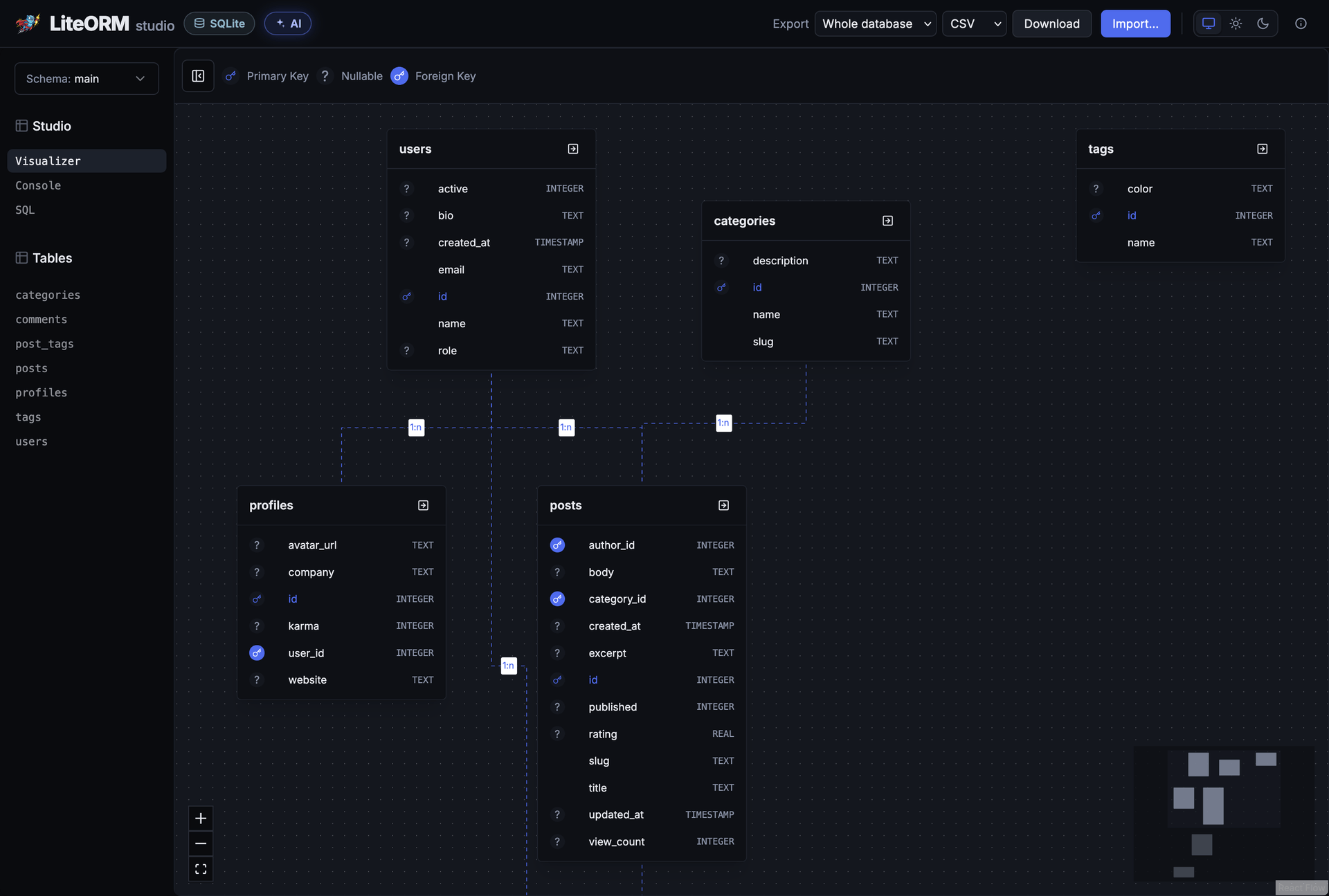
The first Go ORM with an embedded database studio — browse, filter, edit, follow foreign keys, and run SQL right in the browser, mounted as a stdlib http.Handler behind your own auth. And AI is built in: describe a filter or a whole query in plain English and get SQL back, with result sets charted automatically.
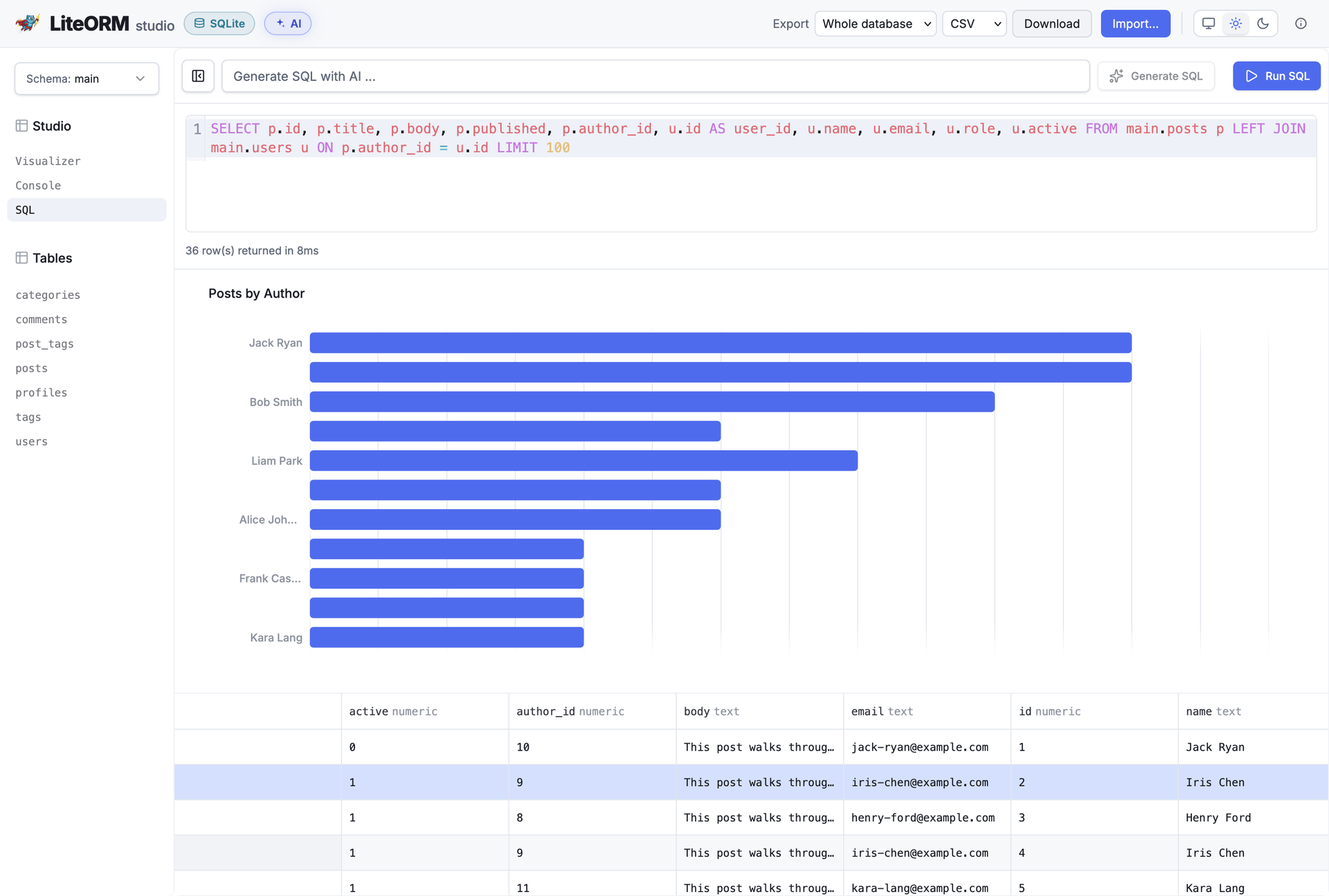
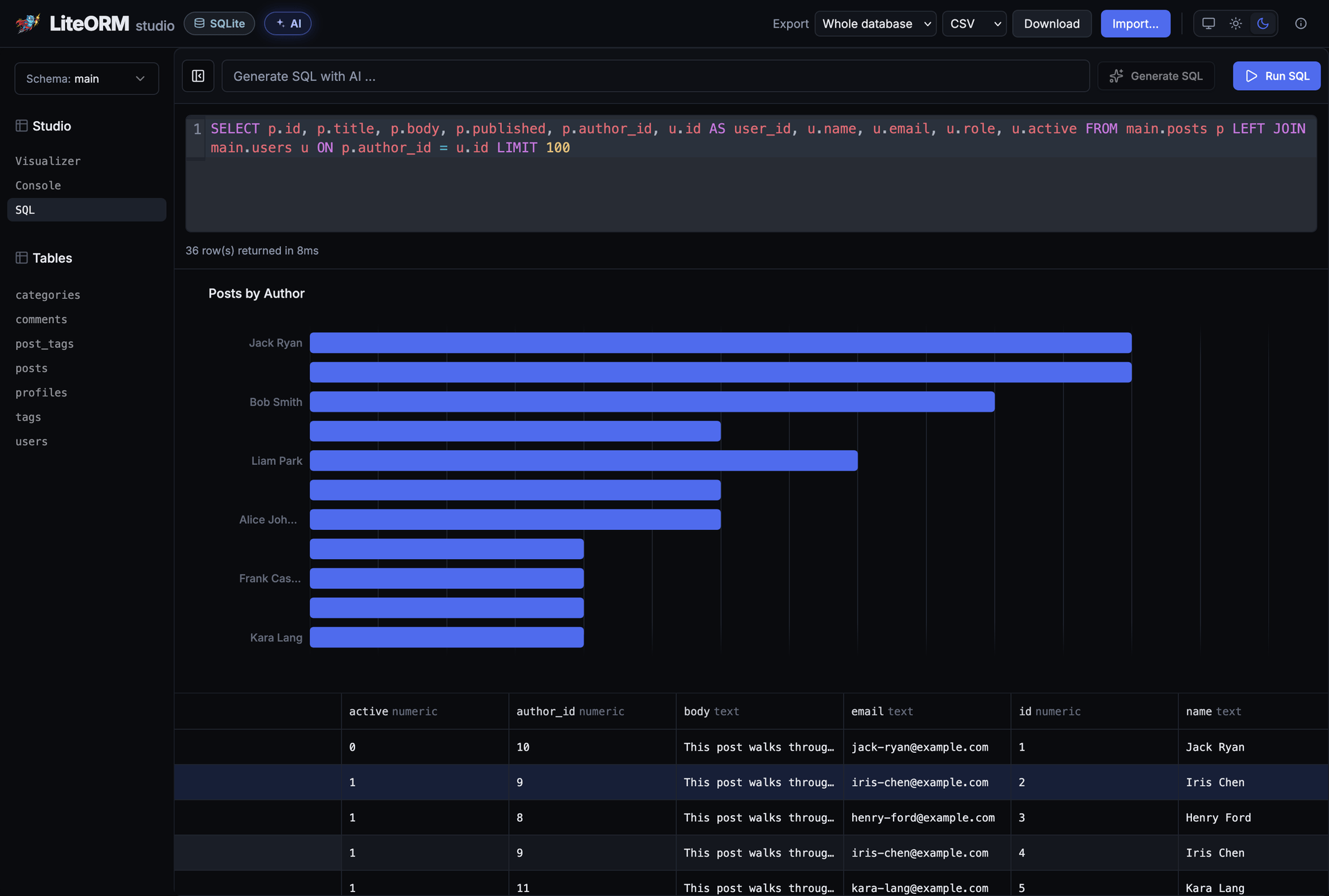
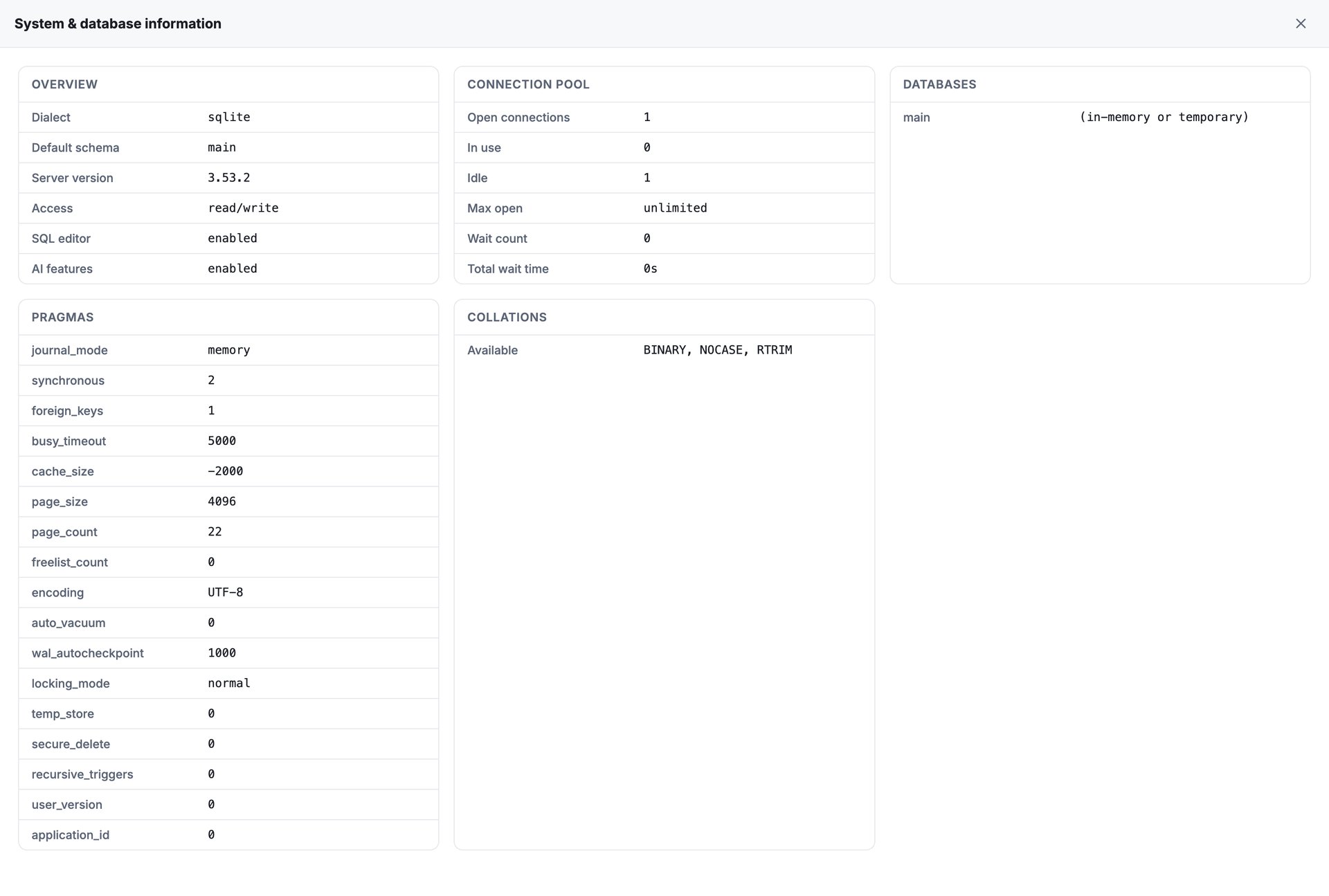
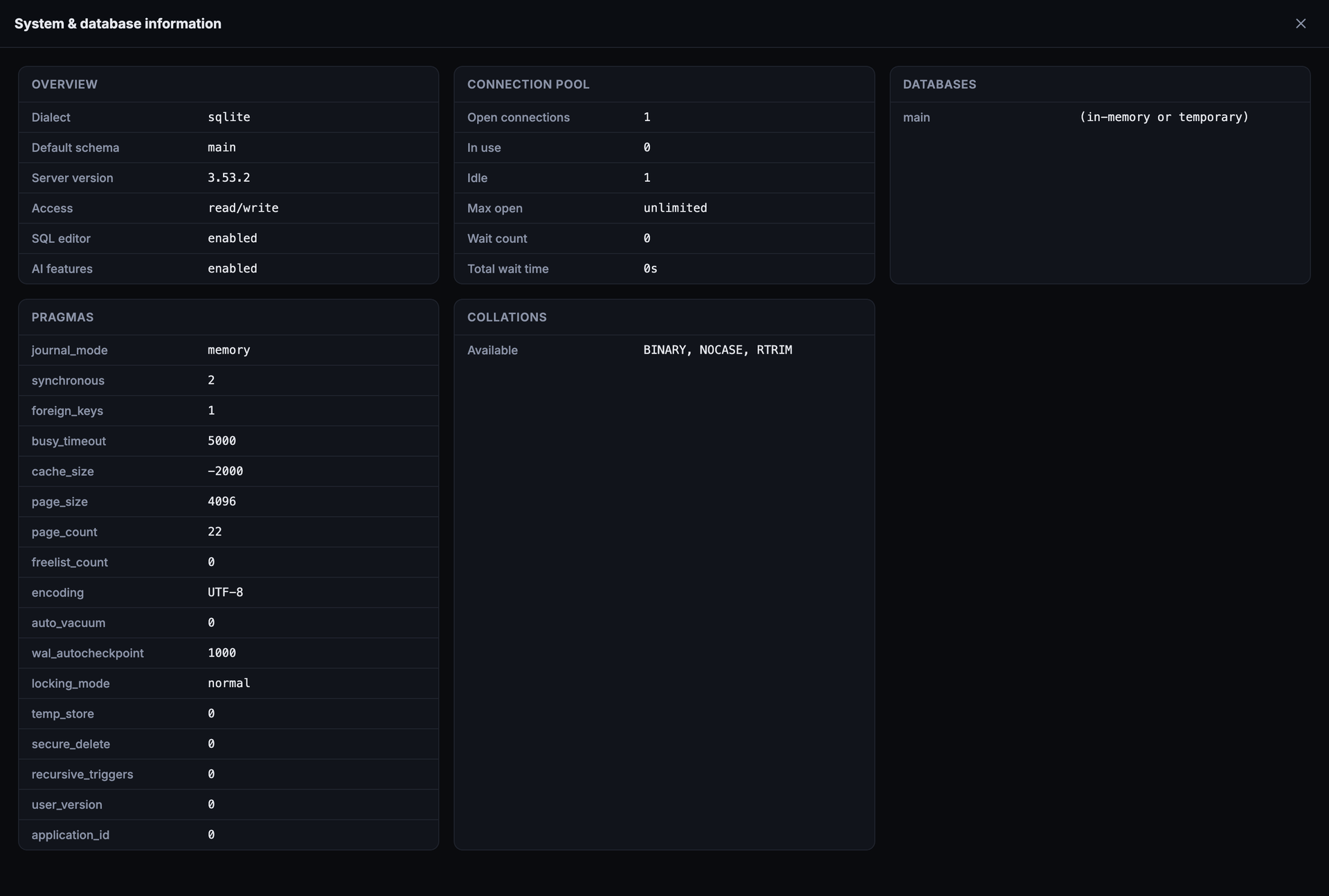
Two front-ends are the floor. Stacked on top, in the same library:
import (  "liteorm.org/dialect/sqlite"  "liteorm.org/orm"  "liteorm.org/query")
db, _ := sqlite.Open("app.db")defer db.Close()
// Declarative: tag a model, migrate, CRUD.type Author struct {  ID    int64  Name  string  Email string `orm:"email,unique"`}func (Author) TableName() string { return "authors" }
_ = orm.AutoMigrate[Author](ctx, db)authors := orm.NewRepo[Author](db)_ = authors.Create(ctx, &Author{Name: "Ada", Email: "ada@example.com"})
// Explicit: typed predicates on the same DB.hits, _ := query.Select[Author](db).  Filter(query.Col[string]("email").Like("%@example.com")).  OrderBy("name").All(ctx)
Add the core plus the backend you want — the core pulls in zero drivers. Full setup in Getting started.
LiteORM is the only Go library that puts a typed query builder and a declarative ORM over one core — so every win below holds across both front-ends, not just one.
| Capability | LiteORM | gorm | bun | sqlc | ent |
|---|---|---|---|---|---|
| Query builder and declarative ORM in one library | – | – | – | ||
| Generics-first runtime, no hot-path reflection | – | ||||
| CGo-free SQLite (pure Go, no C toolchain) | |||||
| At-rest encrypted SQLite, pure Go (no CGo sqlcipher) | – | – | – | – | |
| Embedded database studio (admin GUI) in-tree | – | – | – | – | |
| Studio with built-in AI (NL→SQL, charts) | – | – | – | – | |
| Ships AI Agent Skills + task-oriented docs | – | – | – | – | |
| Typed joins, set ops, subqueries, CTEs, windows | – | ||||
| Associations + N+1-safe eager load | – | ||||
| Normalized errors across all backends | – | – | – | – | |
| Migrations: additive auto + reviewable destructive | – | ||||
| Codegen: typed columns / models / SQL→Go | – | – | |||
| SQLite vector + FTS5 + hybrid search, changesets | – | – | – | – |